What is UV?
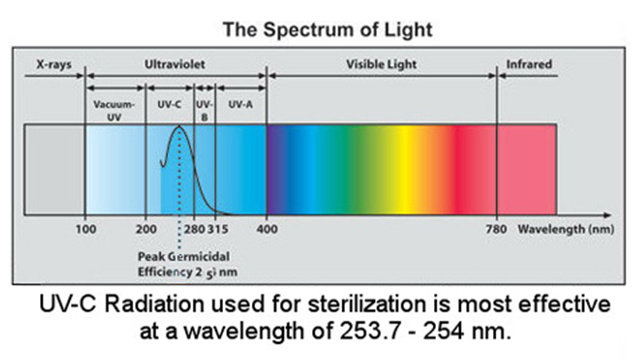
Ultraviolet (UV) radiation is an invisible form of electromagnetic energy from the sun and artificial sources with wavelengths shorter than visible light. It is divided into UVA, UVB, and UVC bands.
UVA: Wavelengths of 315–400 nm. It penetrates the skin more deeply, contributing to skin aging.
UVB: Wavelengths of 280–315 nm. Absorbed mostly by the ozone layer, but the portion that reaches the surface can cause sunburn and is a significant factor in skin cancer.
UVC: Wavelengths between 100–280 nm represent the most energetic type of UV for destroying microorganisms, but they are almost entirely absorbed by the Earth's atmosphere.
What Is UVC?
UVC is a short (253.7nm) wavelength ultraviolet radiation that is highly germicidal. UVC technology is very effective at inactivating microorganisms such as bacteria, viruses, and protozoa. However, it does not remove physical impurities such as dust or suspended particles, nor does it change the color, taste, or odor of water.
What is UV System?
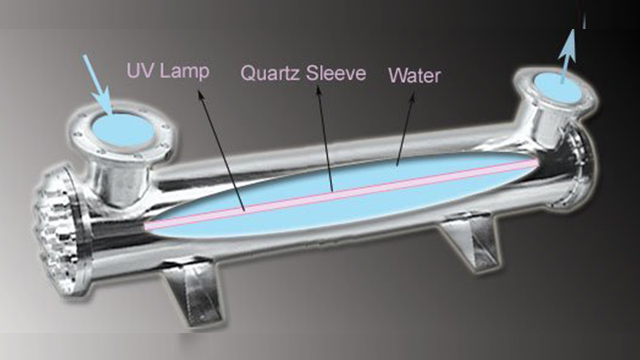
A UV system uses ultraviolet (UV-C) light to disinfect water. In this process, water flows through a chamber containing a UV lamp protected from water by a quartz sleeve, which allows the germicidal UV light to penetrate the water and inactivate microorganisms. UV systems provide a safe, chemical-free, and highly effective method of water purification. The effectiveness of UV systems depends on clear water, requiring pre-treatment to remove turbidity, or cloudiness, which can block the UV light. Water must flow at a rate slow enough for sufficient exposure to the UV light to ensure complete disinfection. The quartz sleeve must be kept clean, and the UV lamp requires timely replacement to maintain optimal performance and effective UV output.
Advantage of UV System.
Chemical-Free: UV systems disinfect without adding chemicals, preserving the water's natural taste and quality.
Highly Effective: They effectively inactivate 99.99% of harmful bacteria, viruses, and parasites that may be resistant to chemical disinfectants, but it is important for the water to be clear and transparent.
Continuous Process: The system continuously disinfects water as it passes through the working UV-C lamp, ensuring a real-time supply of purified water.
Eco-Friendly: Unlike some other methods, UV systems do not produce wastewater or leave behind residual debris.
Comparison of Ultraviolet v/s Chlorine & Ozone
| Methods | Ultraviolet | Chlorination | Ozone |
| Destruction | Physical | Chemical | Chemical |
| Capital cost | Low | Medium | High |
| Operating cost | Low | Medium | High |
| Maintenance cost | Low | Medium | High |
| Maintenance frequency | Low | Medium | High |
| Disinfection Performance | Excellent | Very Good | Unpredictable |
| Contact time | 1-5 Seconds | 25-45 minutes | 5-10 minutes |
| Personal Hazards | Low | Medium | High |
| Toxic Chemicals | No | Yes | Yes |
| Water Chemistry change | No | Yes | Yes |
| Residual effect | No | Yes | Yes |